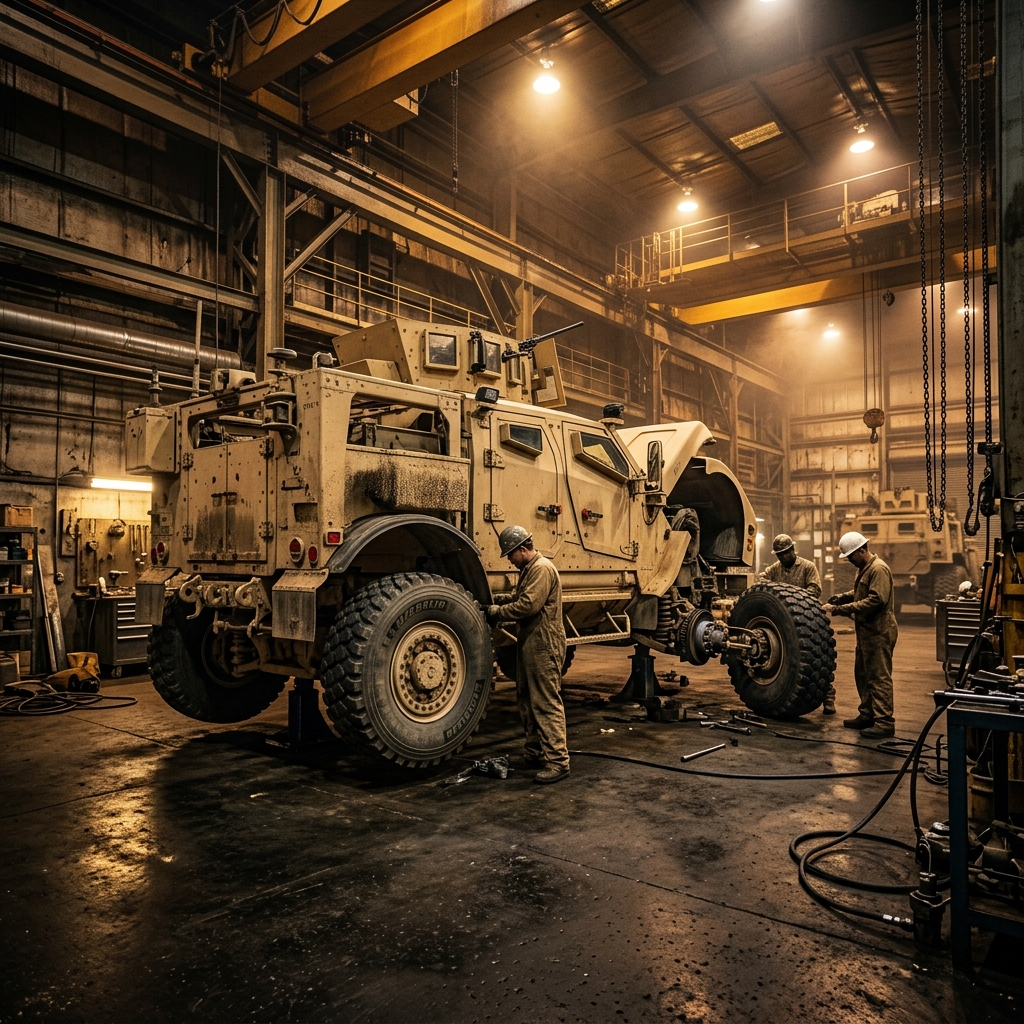
MRAP Tire Replacement and Run-Flat InsertMaintenance
Heavy armored MRAP vehicles demand specialized tire maintenance equipment. Understand MRAP tire assemblies, run-flat insert service requirements, and the GM Operation machine ecosystem.
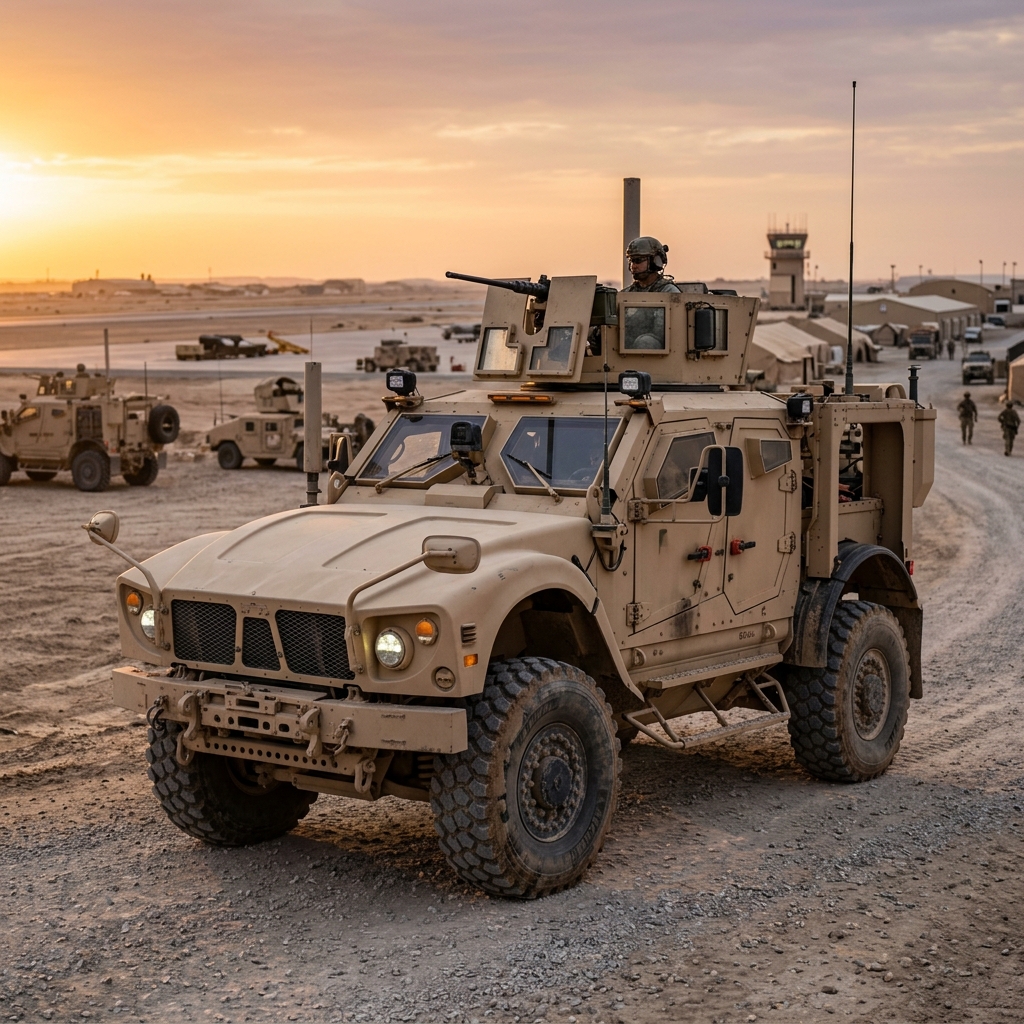
Why MRAP Tire Replacement Is a Critical Maintenance Challenge
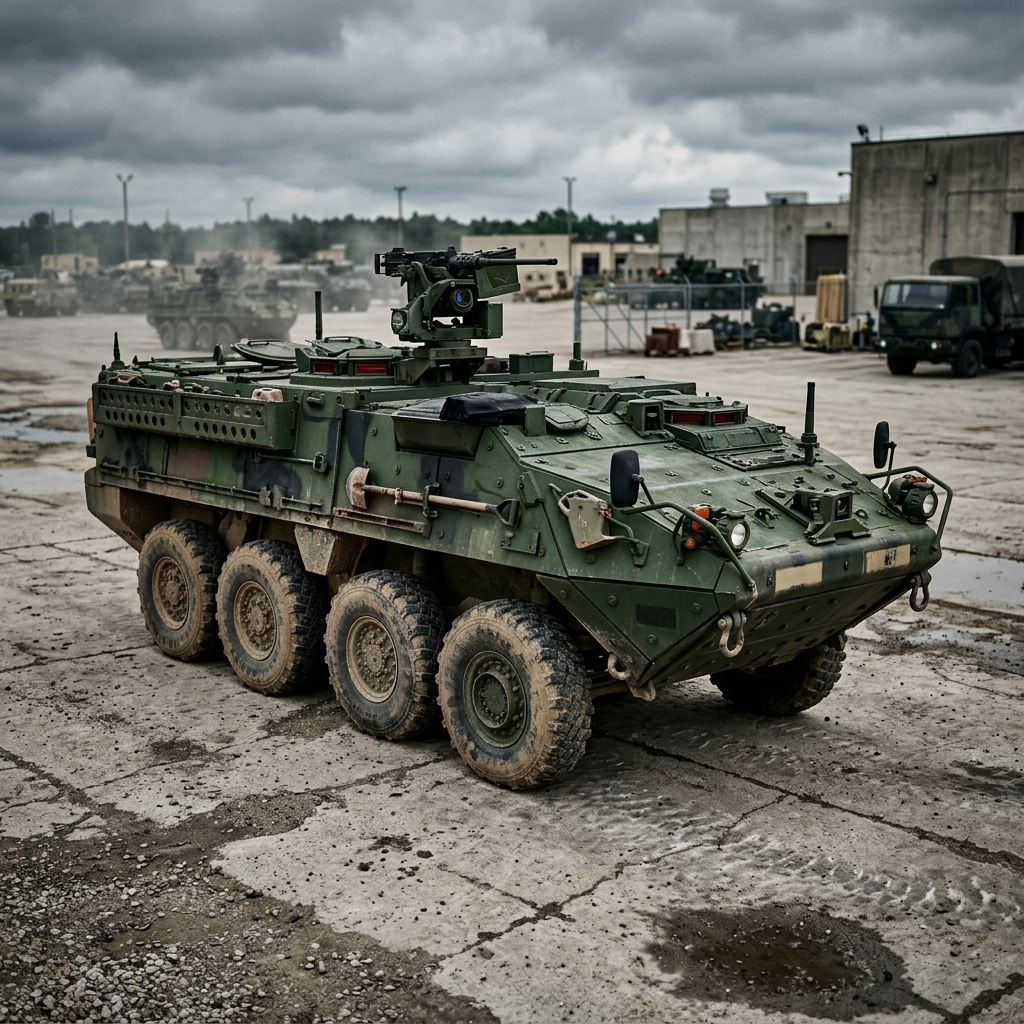
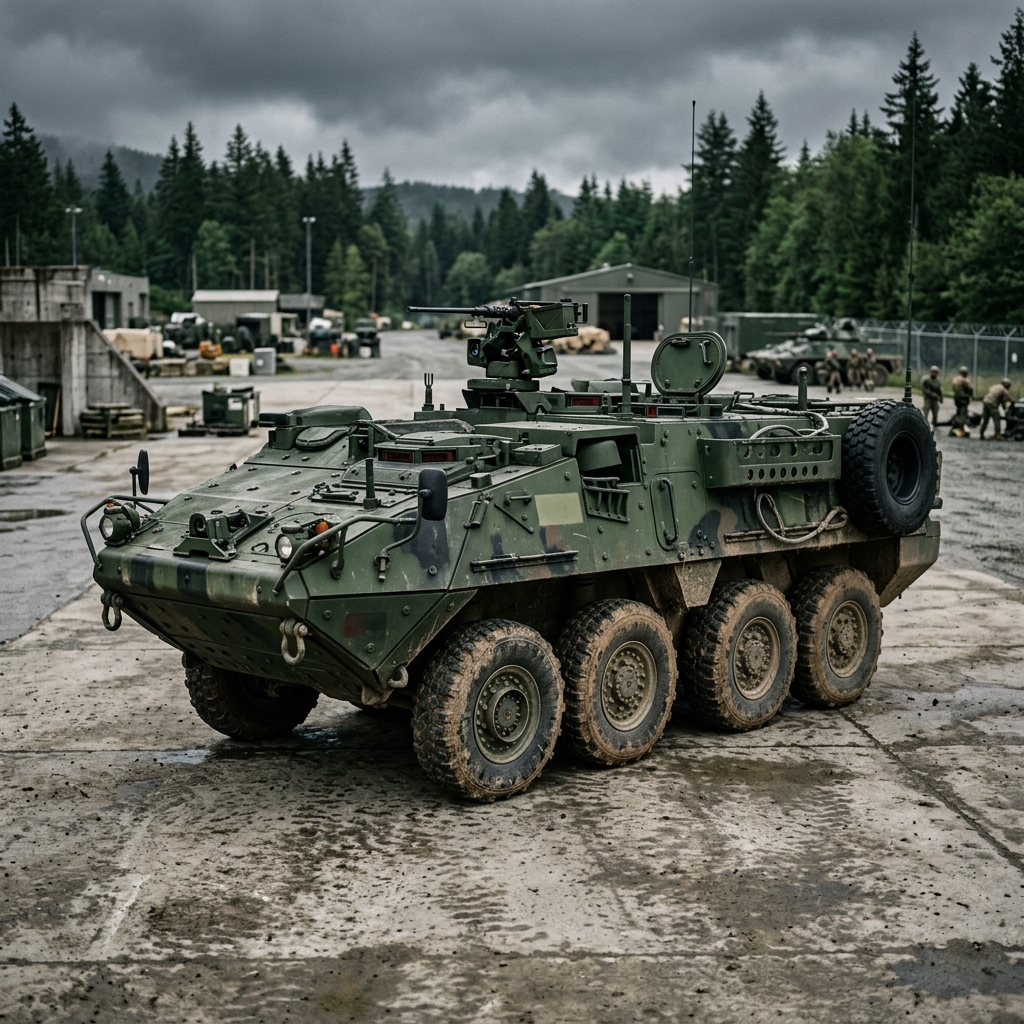
MRAP (Mine-Resistant Ambush Protected) vehicles are among the heaviest armored platforms in modern military fleets. Their tire assemblies — including large, heavy-duty tires, reinforced rims, and run-flat inserts — can weigh significantly more than standard tactical vehicle tire assemblies.
This weight and scale creates a serious maintenance burden. Manual handling of MRAP tire and run-flat components is dangerous, slow, and physically demanding. Run-flat insert removal is particularly challenging due to the tight fit and extreme weight of the insert itself. GM Operation run-flat tire changing machines are designed to handle these heavy assemblies with hydraulic control, safety shielding, and precision.
Extreme Assembly Weight
MRAP tire assemblies are among the heaviest in military service — exceeding safe manual handling thresholds.
Run-Flat Insert Extraction
Heavy-duty run-flat inserts require significant hydraulic force for safe removal and installation.
Armored Rim Handling
Reinforced rims and specialized bead configurations demand controlled, equipment-assisted disassembly.
Maintenance Downtime
Without dedicated equipment, MRAP tire changes can take significantly longer, increasing vehicle downtime.
MRAP Tire, Rim, and Run-Flat Insert Reference
Technical reference data for MRAP tire assemblies. Verify all specifications before procurement or maintenance operations.
| Parameter | Specification |
|---|---|
| Vehicle Family | MRAP (Mine-Resistant Ambush Protected) |
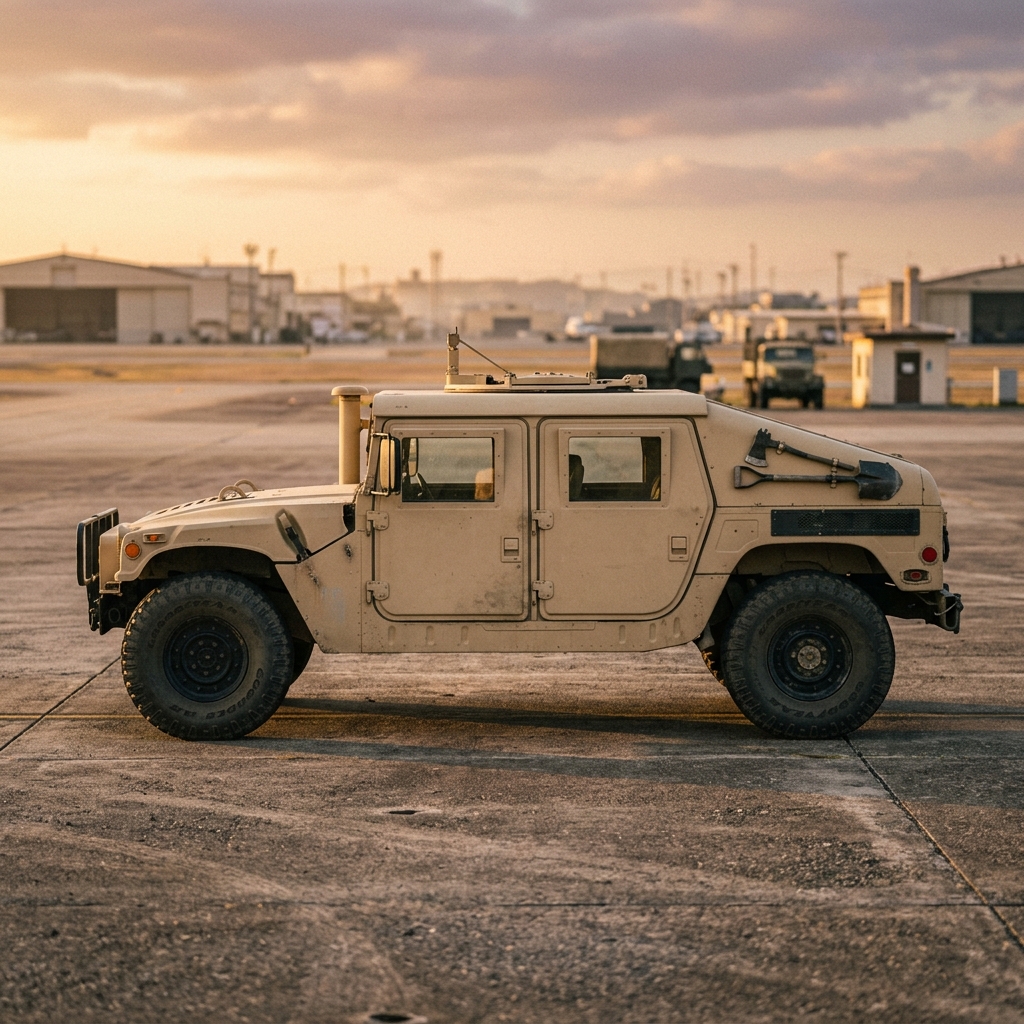
| Common Variants | MaxxPro, Cougar, Buffalo, RG-31, RG-33, Caiman, M-ATV |
| Tire Size | [INSERT VERIFIED TIRE SIZE — varies by variant] |
| Rim Size | [INSERT VERIFIED RIM SIZE] |
| Rim Type | [INSERT VERIFIED RIM TYPE] |
| Run-Flat Insert | [INSERT VERIFIED RUN-FLAT INSERT TYPE] |
| Axle Configuration | 4×4 or 6×6 depending on variant |
| Approx. Assembly Weight | [INSERT VERIFIED — typically very heavy] |
MRAP Run-Flat Tire Maintenance Workflow
High-level operational workflow for run-flat tire servicing. Equipment-specific procedures require GM Operation operating manuals.
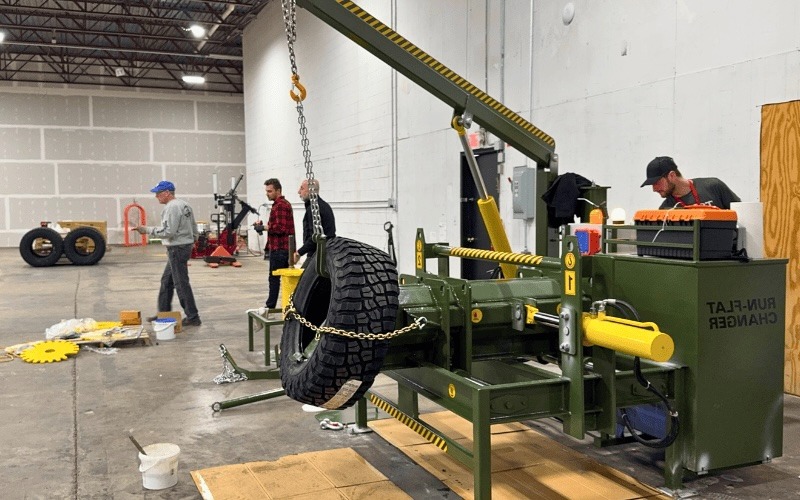
Heavy Lift Removal
Remove MRAP wheel assembly using crane, forklift, or approved heavy lifting equipment due to extreme weight.
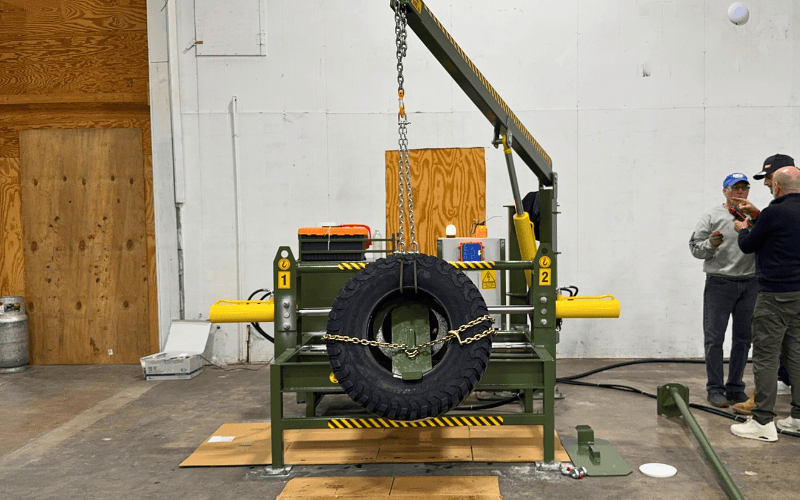
Machine Mounting
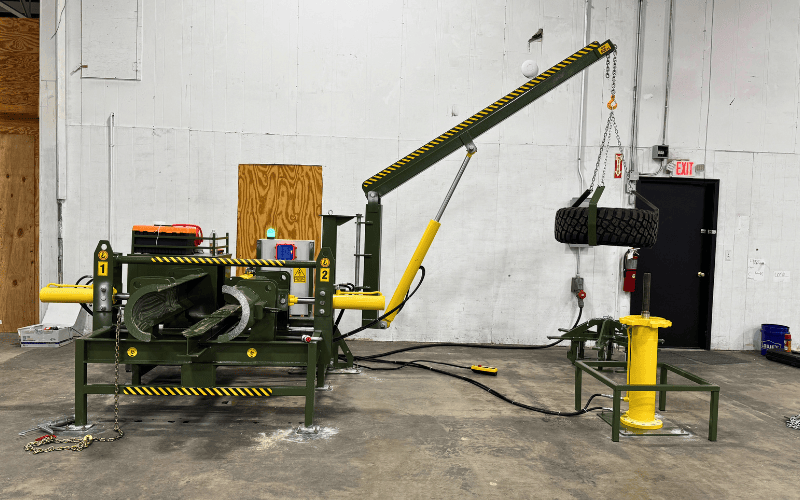
Secure assembly on GM Operation machine. Hydraulic bead break handles high-resistance bead seating.
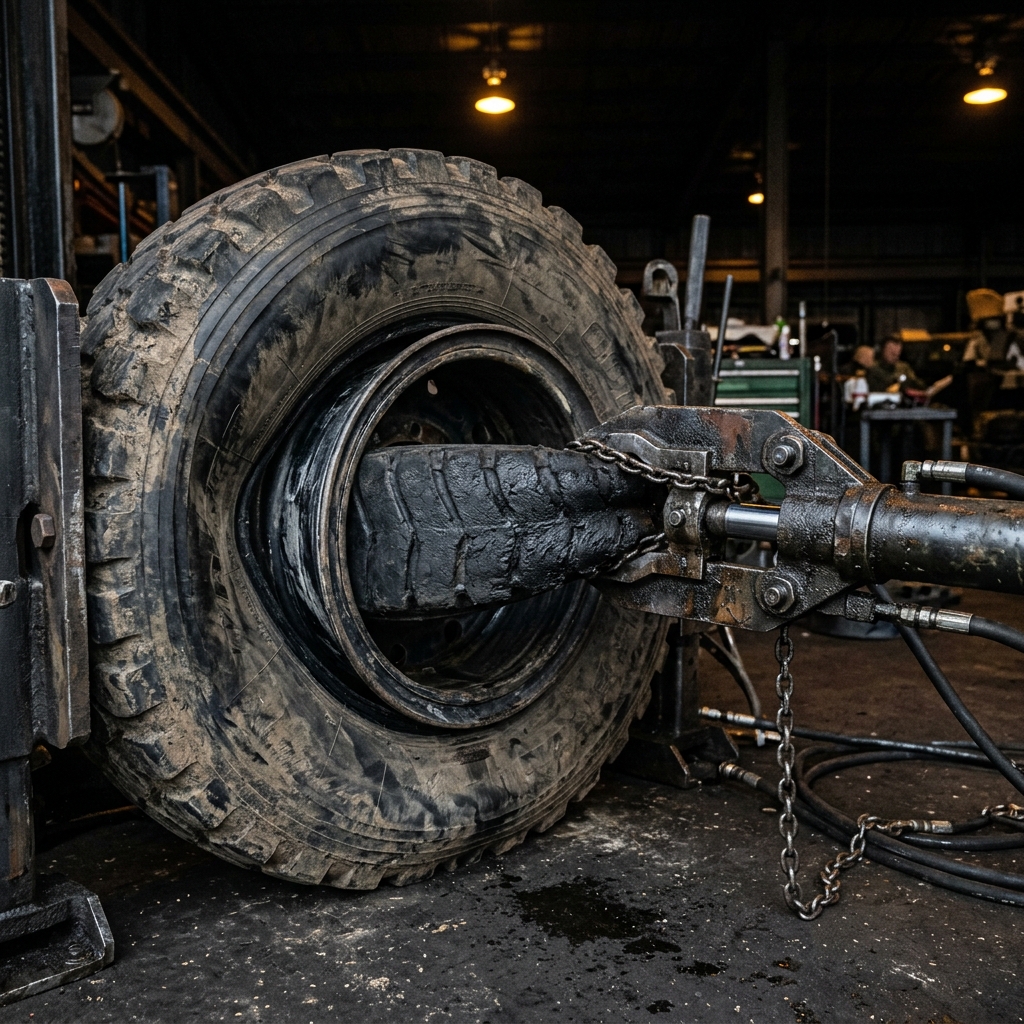
Insert Service
Hydraulic extraction of heavy run-flat insert. Inspect for blast damage, fatigue, or deformation. Replace as needed.
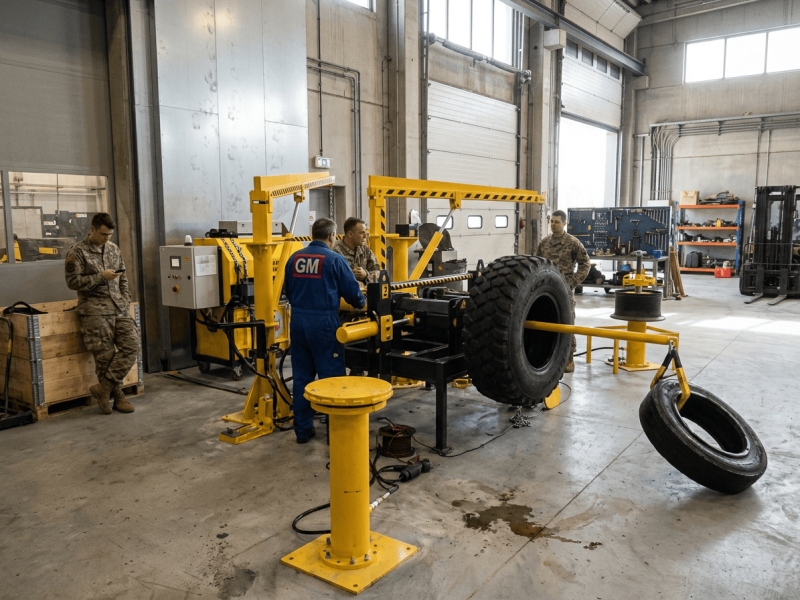
Reassembly & Verify
Reassemble under controlled pressure. Verify inflation, torque, and safety parameters before reinstallation.
Validate MRAP Compatibility
Check if your MRAP tire assembly is compatible with GM Operation run-flat tire changing machines.
Recommended GM Operation Configuration for MRAP
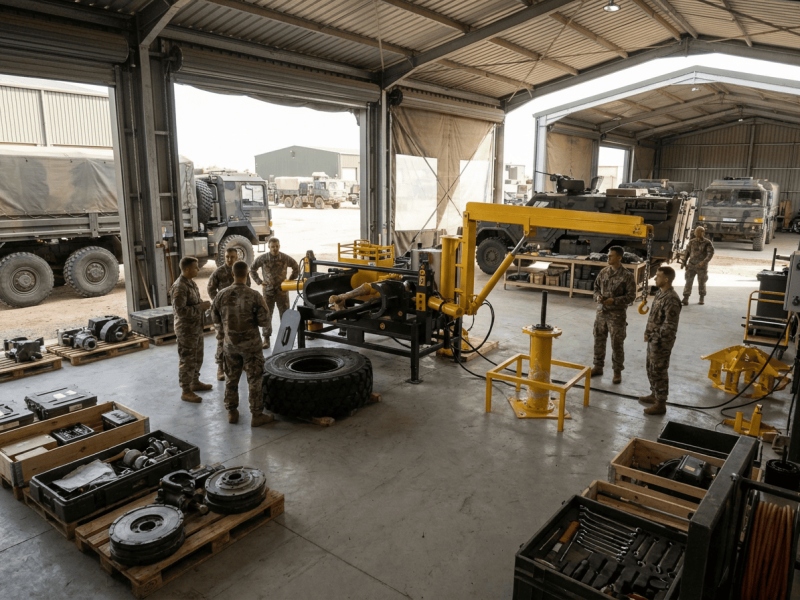
For MRAP fleets, the Workshop Model is recommended for depot-level heavy tire servicing. Container configuration supports remote and deployed maintenance. Mixed MRAP fleets should request a compatibility review.
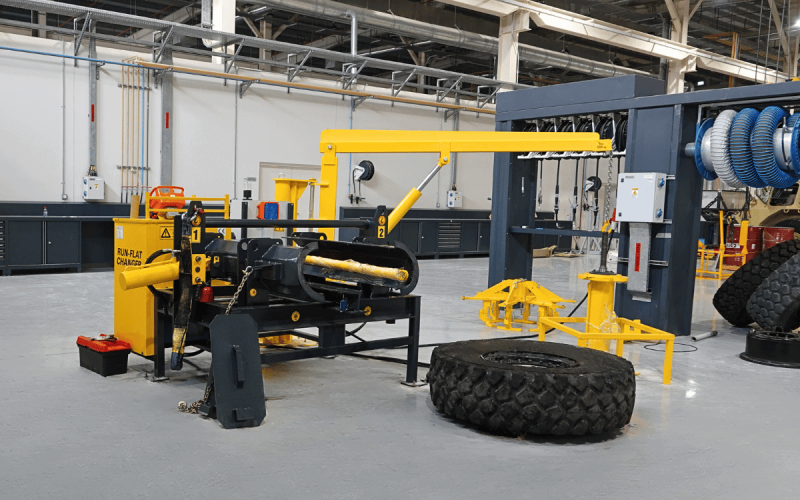 Workshop
 Workshop Model
Fixed depot installation for MRAP tire servicing. Recommended for centralized maintenance facilities handling heavy armored vehicle tire assemblies with full infrastructure support.
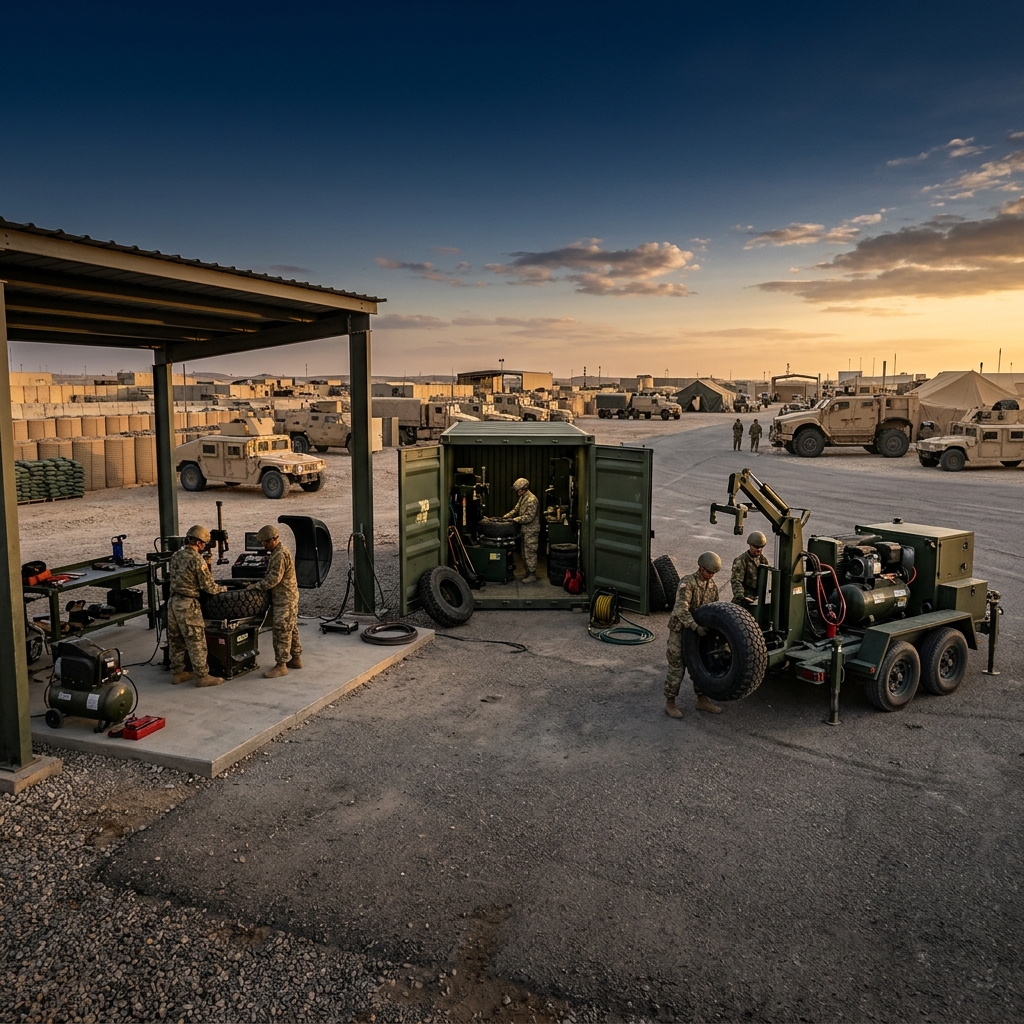
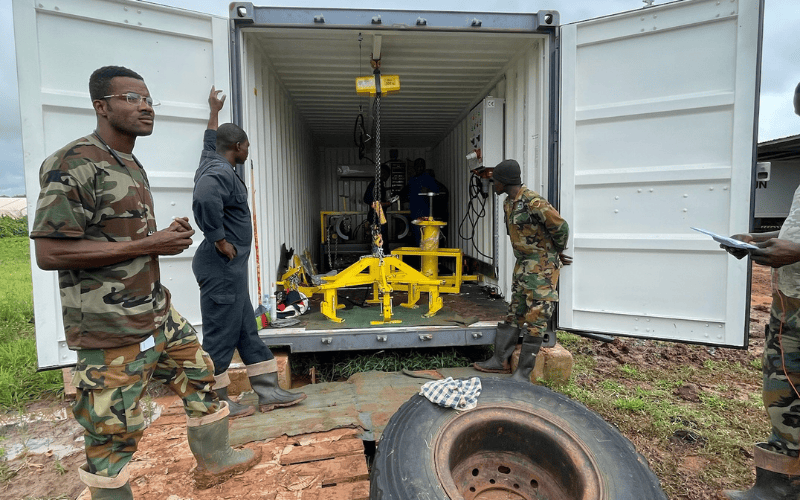 Container
 Container Model
Containerized field workshop for MRAP tire maintenance at remote bases and FOBs where depot-level facilities are unavailable.
 Compatibility Review
 Compatibility Review
MRAP fleets include multiple variants with different tire, rim, and insert configurations. A compatibility review validates the right machine for your specific vehicle mix.
MRAP Depot vs. Field Maintenance Support
Depot / Central Maintenance
Heavy MRAP tire servicing at centralized facilities with crane support, parts inventory, and full inspection capability. Ideal for RESET, reconditioning, and scheduled maintenance programs.
- Workshop Model — primary recommendation
- Heavy lifting infrastructure
- Full inspection and QC
- Parts and insert storage
- RESET and reconditioning programs
Remote / Forward Support
Deployed MRAP tire maintenance at forward locations, remote bases, and contingency environments. Container model provides self-contained heavy tire service capability.
- Container Model deployment
- Forward operating base support
- Contingency maintenance
- Reduced infrastructure requirement
- Heavy assembly capability in field
MRAP Compatibility Review Requirements
Provide these data points when requesting a compatibility review for MRAP platforms.
Why MRAP Maintenance Justifies Specialized Equipment
Safety Critical
MRAP tire assemblies exceed safe manual handling weights. Hydraulic equipment is not optional — it is a safety necessity for maintainer protection.
Operational Readiness
MRAP vehicles are high-value assets. Faster tire turnaround directly supports mission availability and force protection capability.
Injury Prevention
Manual handling of heavy MRAP tire components has documented injury risk. Mechanized handling significantly reduces musculoskeletal injury exposure.
Insert Protection
Run-flat inserts are expensive to replace. Controlled hydraulic extraction reduces insert damage and extends replacement intervals.
Mixed Fleet Efficiency
A single machine platform can support multiple MRAP variants and other heavy armored vehicles, maximizing equipment ROI.
Sustainment Planning
Dedicated tire maintenance equipment supports lifecycle sustainment planning and long-term fleet readiness investment.
Related Resources & Tools
MRAP Run-Flat Maintenance — Frequently Asked Questions
Validate Your MRAP Run-Flat Tire Maintenance Requirement
Validate your MRAP run-flat tire maintenance requirement. GM Operation provides NATO-compatible, NSN-assigned run-flat tire changing machines for depot and field operations.